Is Islam a threat to Western civilization?
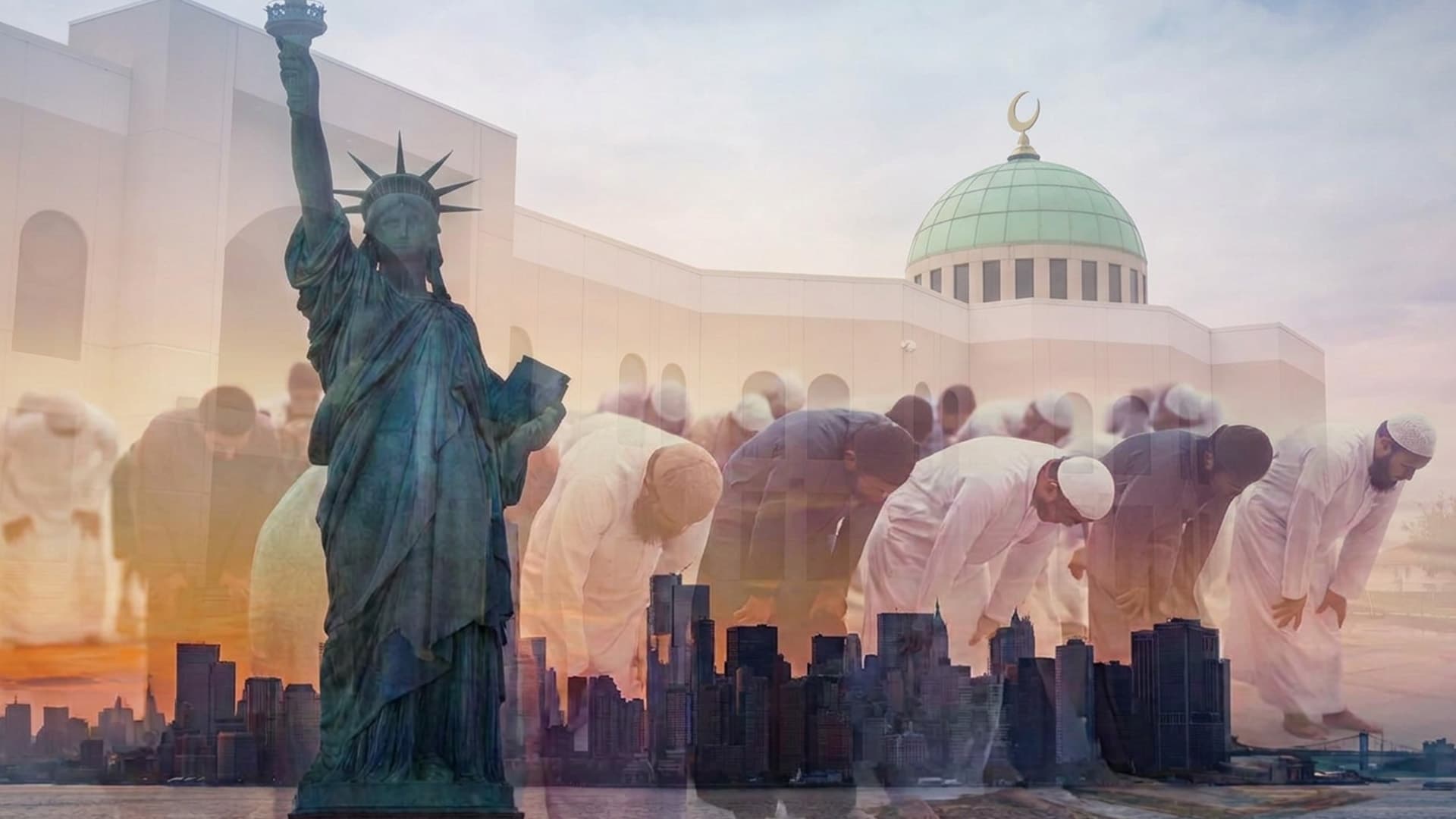
Few questions are asked as confidently—and as vaguely—as whether Islam is a threat to Western civilization. The claim often emerges in moments of social anxiety: debates over migration, national identity, security, and values. Framed this way, it sounds less like an argument than a warning, as though something ancient and fragile is under siege.
Few questions are asked as confidently—and as vaguely—as whether Islam is a threat to Western civilization. The claim often emerges in moments of social anxiety: debates over migration, national identity, security, and values. Framed this way, it sounds less like an argument than a warning, as though something ancient and fragile is under siege.
But before the claim can be assessed, its terms have to be examined. What exactly is meant by “Western civilization”? And what does it mean for a civilization to be “threatened”?
What is being threatened, exactly?
The language of threat assumes a stable object under attack—something clearly defined, internally coherent, and morally settled. Yet “Western civilization” has never fit that description.
Civilizations are not fixed essences handed down intact through time. They are stories societies tell about themselves, constructed through selective memory. Ancient Greece is remembered for philosophy and democracy, not for slavery or the exclusion of women.
Rome is celebrated for law and administration, not for conquest or spectacle. These omissions are not accidents; they are choices.
This matters because Islam is rarely measured against the full historical record of Europe, but against an idealized version of it. The “West” invoked in civilizational rhetoric is less a historical reality than a moral self-portrait—one that smooths over contradiction and conflict.
The familiar civilizational storyline—from the advances of Greece to Rome to the Renaissance to the Enlightenment—functions more as cultural memory than historical fact. For centuries after the fall of Rome, much of Europe was ruled by Gothic kingdoms. During this period, political and religious instability was rife: Christianity itself was deeply divided, with forms of belief—such as Arian and Unitarian Christianity—that were later deemed heretical and erased from the dominant narrative.
These societies were European, Christian, and Western in every geographic sense, yet they are rarely included in popular accounts of “Western civilization.” Their exclusion reveals how malleable the category is. What counts as Western is not determined by history alone, but by later judgments about legitimacy and continuity.
Islam, by contrast, is judged as if it were static and monolithic—measured against a Western ideal that never truly existed in unified form. If Western civilization itself has been fluid, fractured, and repeatedly reinvented, the idea that it could be existentially threatened by a single religious tradition becomes far less obvious.
The making of a boogeyman
So, how and why did Islam come to be framed as a civilizational antagonist?
Part of the answer lies in the mythologizing of conflict. Battles such as Tours or Vienna are repeatedly invoked as decisive moments in a civilizational struggle between a “Christian Europe” and an “Islamic East”. Yet these events are often stripped of context and inflated with meaning they did not carry at the time.
The historian Edward Gibbon, writing centuries after the Battle of Tours, famously speculated that had the outcome been different, Europeans might have been taught the Qur’an in their universities. What is often missed is how much historical work this speculation quietly performs. The battle itself, fought in 732 CE, was not a clash between a unified “Christian Europe” and an Islamic civilization bent on cultural replacement. It was a regional conflict between a Frankish army under Charles Martel and a raiding force associated with the Umayyad Caliphate, operating on the periphery of its control in what is now southern France. Europe, at the time, was politically fragmented, culturally diverse, and far from possessing the civilizational self-consciousness later projected onto it.
Gibbon’s counterfactual transforms this limited encounter into something far grander. A battle whose immediate stakes concerned territory, tribute, and regional power is reimagined as the moment upon which Europe’s religious and cultural identity supposedly hung. Centuries of social development, theological debate, and political evolution are collapsed into a single knife-edge scenario: we almost ceased to be ourselves. The result is not historical explanation but civilizational dramatization. Islam is no longer one actor among many in a messy medieval world; it becomes an existential substitute for “the West,” perpetually imagined as standing just one defeat away from erasure. This is how contingent history hardens into myth—and how later anxieties are projected backward to give them the appearance of inevitability.
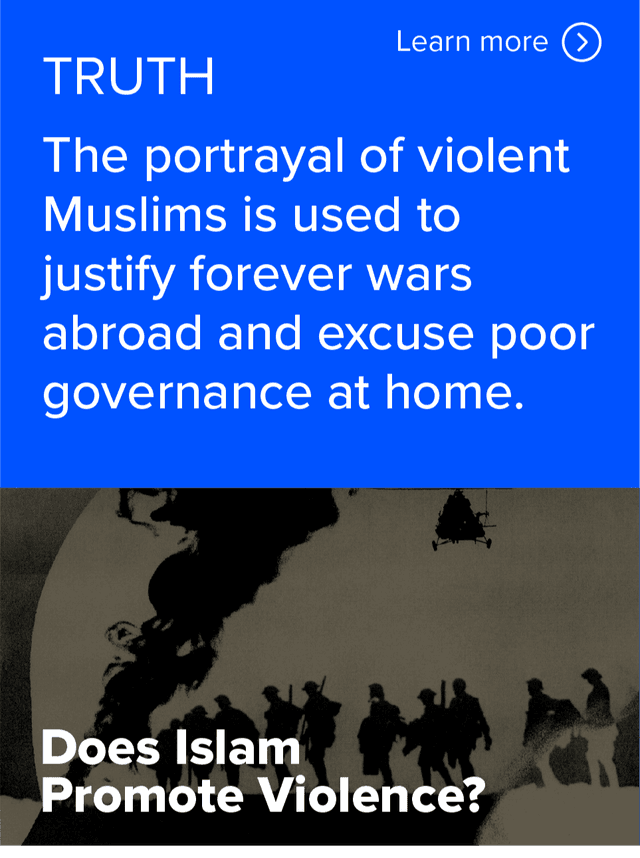
Such myths serve a purpose. They create a sense of perpetual siege, turning Islam into a symbolic enemy against which Western identity can be defined and defended. In times of uncertainty—economic stagnation, cultural change, political polarization—having a clear external or internal “threat” offers psychological and political relief. Complex problems are simplified, responsibility is displaced, anxiety is given a target.
Politically, scapegoating performs valuable work. It allows leaders and movements to mobilize support without addressing structural failures like inequality, deindustrialization, weak social cohesion, or declining trust in institutions. By framing migration or demographic change as a replay of ancient invasions, contemporary challenges are recast as existential emergencies rather than policy questions. Fear becomes a substitute for governance and identity politics crowd out real solutions.
Economically, the logic is just as powerful. A politics of civilizational threat sustains security industries, surveillance regimes, border militarization, and endless “emergency” spending. It channels public frustration downward—toward minorities—rather than upward, toward systems of power that benefit from instability and distraction. In this way, the myth of siege is materially productive.
Once this framing takes hold, Islam no longer needs to do anything to be threatening. Its presence alone becomes suspect. History is mined selectively, symbolism replaces evidence, and every moment of tension is interpreted as confirmation of a story already decided. What began as a narrative about the past becomes a tool for managing the present.
What the historical record actually shows
The lived history between Muslim societies and Europe tells a more complex story.
There were conflicts, certainly—but also alliances, coexistence, and sustained exchange. Early modern Europe was not united against Islam, and religious affiliation did not determine political alignment in any simple way. Protestant powers repeatedly cooperated with the Ottoman Empire against Catholic rivals, whom they often regarded as the greater threat. In England, Elizabeth I engaged in formal diplomatic correspondence with Ottoman rulers, explicitly seeking commercial access and strategic partnership in opposition to Catholic Spain.
Beyond diplomacy, economic interdependence tied Muslim and European societies together for centuries. Trade across the Mediterranean linked ports from North Africa to Italy, France, and Iberia, facilitating the movement not only of goods but of ideas. Intellectual exchange played a decisive role in Europe’s development: Muslim scholars preserved, commented upon, and expanded Greek philosophy; made foundational advances in medicine, astronomy, and mathematics; and transmitted this knowledge to Europe through translation movements centered in places like al-Andalus and Sicily. Many of the texts that later shaped the European Renaissance entered Latin Christendom through Arabic, not directly from antiquity.
Far from existing outside the development of what later came to be called “the West,” Islam was interwoven with it—sometimes as rival, sometimes as partner, often as intellectual interlocutor. This historical entanglement sits uneasily with the idea that Islam has always functioned as a civilizational threat.
Islam and the question of moral threat
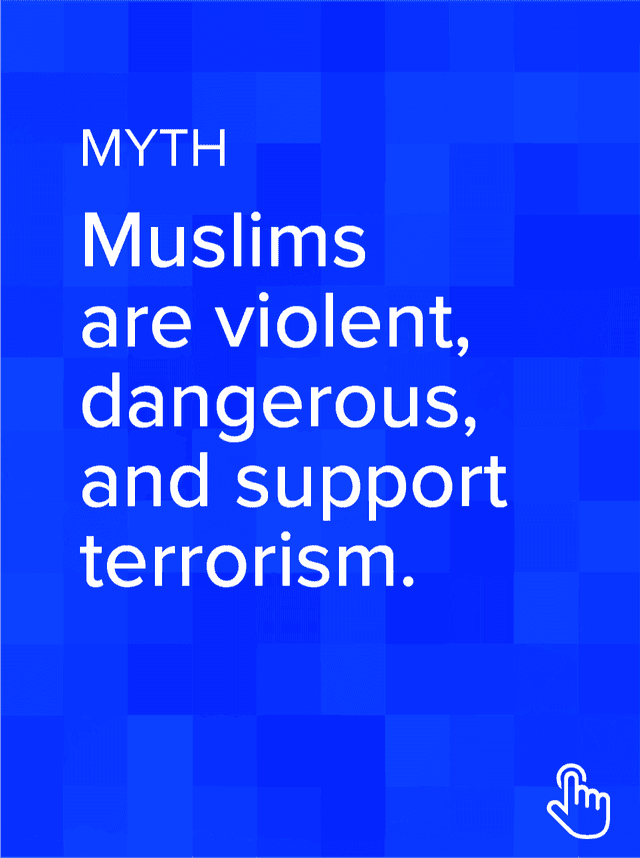
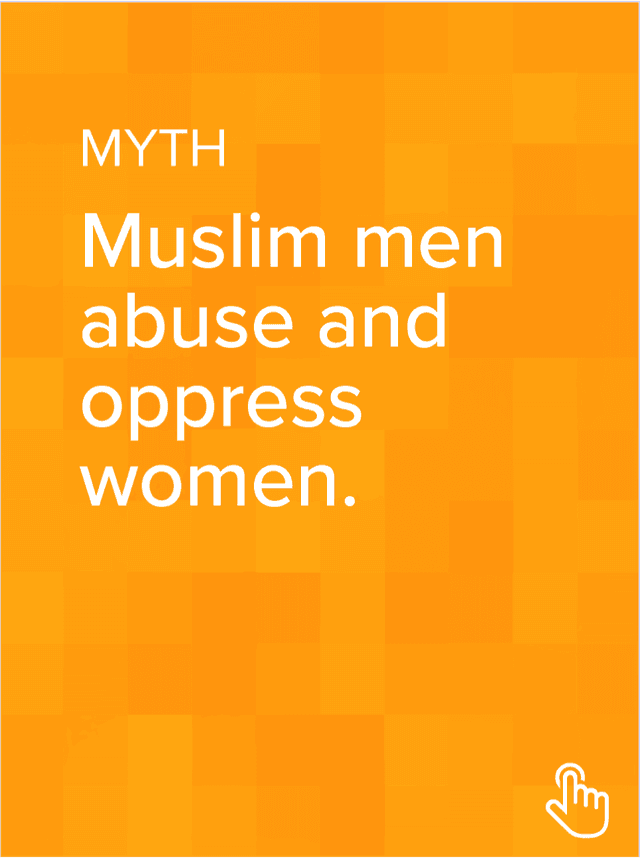
Claims about Islam threatening Western civilization rarely rest on a single concern; they are at once political, economic, cultural, and, most powerfully, moral. Accumulating across several familiar lines of accusation, moral critique of Islam is a powerful tool weaponised to control the broad narrative: Islam legitimizes violence, entrenches gender inequality, suppresses dissent, and resists pluralism. These claims are often presented as self-evident, as though they arise directly from Islam’s core teachings rather than from selective readings shaped by contemporary fears.
For example, Islam’s foundational texts explicitly reject ethnic superiority, grounding moral worth in piety rather than lineage. But that principle sits within a broader ethical framework that complicates the other charges as well. Warfare, for instance, is not absent from Islamic scripture—but neither is it unbounded. Classical Islamic legal thought developed extensive constraints around warfare, proportionality, and the protection of non-combatants, in ways comparable to, and in some cases more explicit than, medieval Christian just-war traditions. Treating violence as uniquely Islamic requires ignoring both these internal constraints and the far greater scale of violence carried out by self-described Western powers in the modern era.
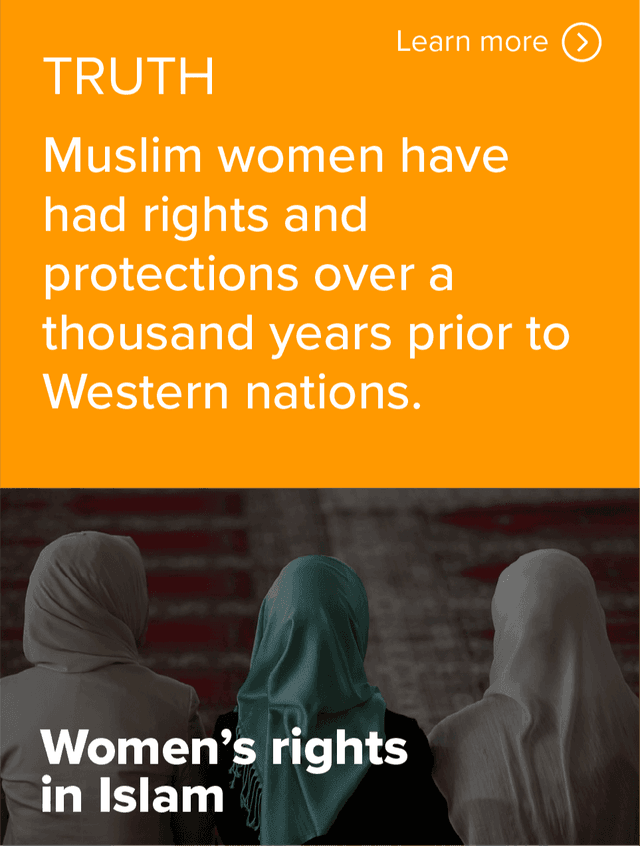
Similarly, accusations of gender inequality often assume that Western norms are morally settled and historically consistent, while Islamic norms are static and regressive. This framing overlooks both the diversity of gender practices across Muslim societies and the relatively recent emergence of many liberal Western standards themselves. It also obscures the fact that patriarchal structures were historically the norm across civilizations, not a Muslim deviation from an otherwise egalitarian Western past.
Charges of pluralistic intolerance follow a similar pattern. Muslim societies did not practice modern liberal pluralism, but neither did medieval or early modern Europe. Yet Muslim-ruled polities often accommodated religious minorities through Islamic legal frameworks that allowed communal autonomy, worship, and internal governance—arrangements that contrast sharply with the forced conversions, expulsions, and confessional wars that marked much of European history. Once again, Islam is selectively judged against an idealized Western present rather than against historical realities.
What unites these accusations is not their substance, but their structure.
An inaccurate depiction of Islam is consistently measured against a selectively sanitized version of Western civilization—one that retroactively claims restraint, equality, and pluralism as timeless values, while treating their historical absence as incidental. Islam, by contrast, is treated as fixed, essential, and fully responsible for the worst actions carried out in its name.
This asymmetry and inaccuracy is crucial to the threat narrative and is precisely why the claim persists.
Islam is not a threat to Western civilization. The real threat lies in civilizational myths that replace historical understanding with inherited fear. If Western civilization is to mean anything more than a slogan, it cannot survive on such myths alone.
For readers interested in deeper historical treatments, see: Richard W. Bulliet, The Case for Islamo-Christian Civilization (Columbia University Press, 2004); Maria Rosa Menocal, The Ornament of the World: How Muslims, Jews, and Christians Created a Culture of Tolerance in Medieval Spain (Little, Brown and Company, 2002); and Jerry Brotton, The Renaissance Bazaar: From the Silk Road to Michelangelo (Oxford University Press, 2002).
See, for example, Quran 49:13, 2:124
See, for example, Al-Shaybani’s Kitab al-Siyar or Al-Mawardi’s Al-Ahkam al-Sultaniyya