Are Muslim women oppressed?
For centuries, Muslim women have been portrayed as veiled, secluded, and oppressed. This portrayal is not accidental. The figure of the poor, helpless Muslim woman trapped in a cruel and backward culture has long been a powerful emotional symbol: one that evokes pity, sympathy, and moral outrage.
For centuries, Muslim women have been portrayed as veiled, secluded, and oppressed. This portrayal is not accidental. The figure of the poor, helpless Muslim woman trapped in a cruel and backward culture has long been a powerful emotional symbol: one that evokes pity, sympathy, and moral outrage. Those emotions have repeatedly been manipulated and mobilized to justify military intervention and colonial domination on a global scale for well over a century. The same imagery has also been used closer to home to erode Muslims’ civil and political rights, as well as to justify surveillance, racial profiling, and deportations. Over time, these images hardened into two misinformed assumptions: that Islam itself is the source of women’s suffering, and that Muslim women need to be rescued from their faith.
However, Islam’s own teachings tell a very different story.
Islam places men and women on equal moral and spiritual footing. Both are addressed directly by God, both are accountable for their actions, and both are promised the same reward for faith and righteousness. The Qur’an repeatedly pairs believing men and believing women side by side, emphasizing shared responsibility, dignity, and worth.
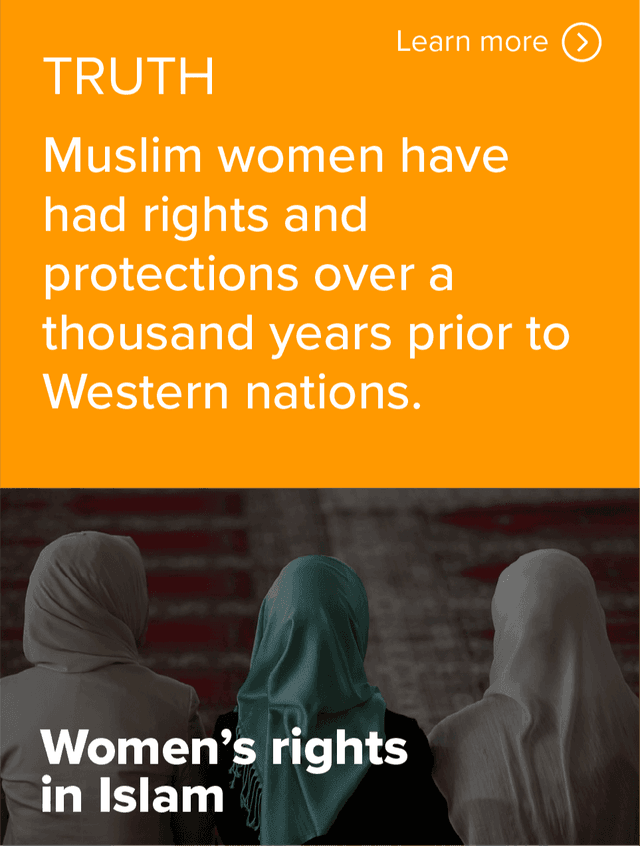
Historically, the emergence of Islam marked a dramatic shift in how women were treated in seventh-century Arabia. Practices such as female infanticide, forced marriage, and treating women as inheritable property were explicitly condemned and outlawed. Women were granted the right to consent to marriage; to own, inherit, and retain property; to initiate divorce; and to be recognized as full legal and moral agents. These were not symbolic gestures but enforceable rights that reshaped social life. The Prophet Muhammad’s own conduct reinforced this ethic. He listened to women, sought their counsel, and defended their dignity. Women debated legal matters, transmitted religious knowledge, and were active participants in shaping the early Muslim community.
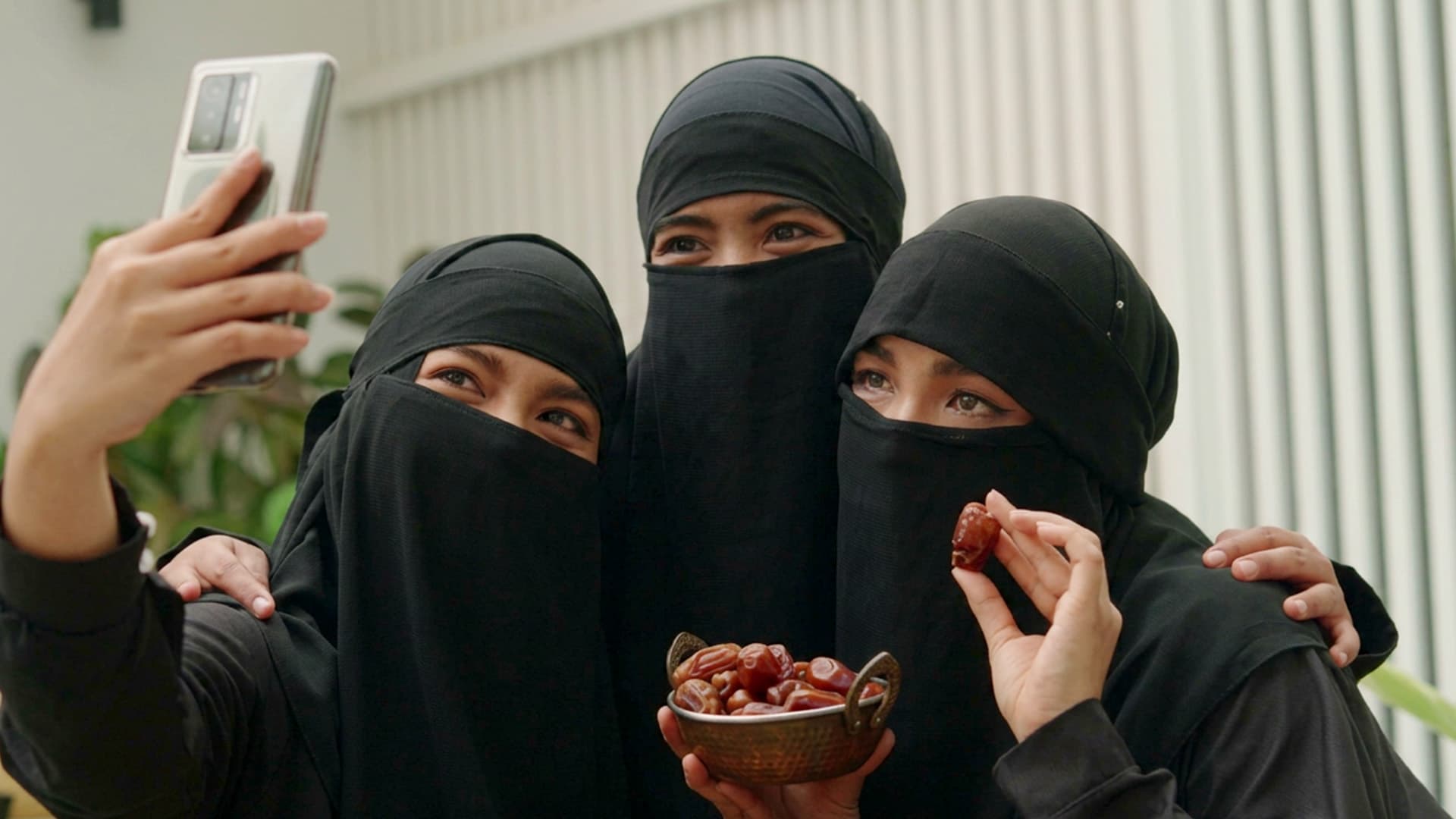
While contemporary ethical standards have largely caught up to these principles, they can now appear so self-evident that they hardly seem worth mentioning. Most people today agree that women deserve legal recognition, rights, and dignity. Tension arises, however, when attention shifts to Islamic practices that do not align with prevailing cultural norms or dominant measures of freedom. Take the hijab, for example, a practice often presented as a universal symbol of subjugation. By mandating women to wear the hijab, surely Islam is oppressive? At this point, it’s important to turn the question back on itself: On what grounds do people decide that something is oppressive? Who sets those standards, and according to which assumptions?
Contrary to popular belief, most Muslim women choose to wear the hijab as an act of devotion to God and in resistance to something far more oppressive: a culture saturated with sexual imagery that objectifies and reduces women’s worth to appearance and desirability.
For many Muslim women, the hijab is the ultimate symbol of liberation, representing autonomy and moral agency rather than constraint. What this reveals is that, in many cases, the label of oppression is applied because the practice of hijab represents nonconformity with Western expectations.
A similar logic shapes reactions to Islamic legal distinctions between men and women, which are frequently described as imbalanced or discriminatory. For example, in matters such as inheritance, men may receive a larger share, a fact often cited as misogynistic. Yet this distribution is not rooted in the belief that women are worth less. Rather, it reflects a broader Islamic legal framework in which men are required to provide financially for their families, while women’s wealth always remains their own. These distinctions, and others like them, are tied to differing social/familial obligations, not to valuing males over females.
Crucially, all of this is acknowledged without denying that Muslim women today do face real injustices in many parts of the world. Abuse, forced marriages, so-called honor-based violence, and legal discrimination occur in some Muslim societies, just as they do all over the world. It’s common for distortions of Islam to be invoked to support such injustices. However, attributing these harms to Islam itself dangerously collapses a crucial distinction between religious teachings and human failures to live up to them. Many practices that harm women are rooted in tribal customs, political instability, colonial legal systems, or other norms that Islam explicitly seeks to reform or dismantle. Honor killings, for instance, have no basis in Islamic teachings and are treated as murder under classical Islamic law.
Islam dignifies women and prioritizes their well-being, affording them what is needed to flourish. The deeper problem is not Islam, but a dominant narrative that only recognizes Muslim women’s agency when it conforms to externally imposed norms.
The claim that Islam is inherently misogynistic often feels intuitive because it draws strength from repetition: selective images, simplified narratives, and a refusal to see Muslim women as moral agents in their own right.
Yet for many Muslim women, their faith is one of the most powerful tools they have for naming injustice, demanding accountability, and insisting on dignity.