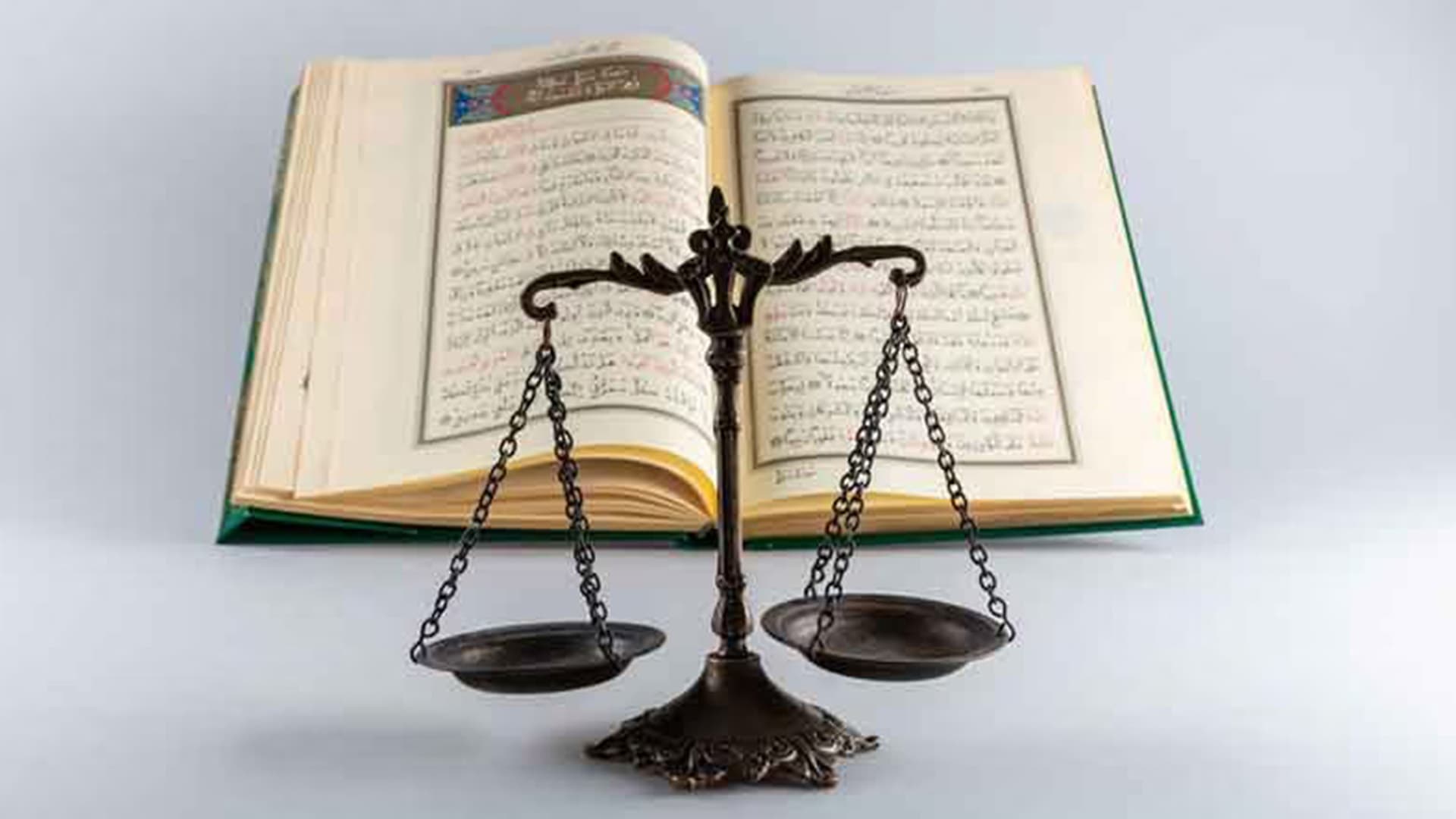
What is Sharia?
When people hear the phrase “Sharia punishment,” a very specific image often comes to mind. For many, it immediately conjures scenes of amputations or stoning, presented as proof that Islamic law is inherently harsh or cruel. These images have circulated so persistently in media coverage and political rhetoric that they have come to stand in for the Sharia itself. But this narrow focus tells us far more about modern anxieties than about what the Sharia actually is.
When people hear the phrase “Sharia punishment,” a very specific image often comes to mind. For many, it immediately conjures scenes of amputations or stoning, presented as proof that Islamic law is inherently harsh or cruel. These images have circulated so persistently in media coverage and political rhetoric that they have come to stand in for the Sharia itself. But this narrow focus tells us far more about modern anxieties than about what the Sharia actually is.
At its core, the Sharia is the legal and ethical tradition that guides Muslim life.
Linguistically, it means a path or way to a watering hole, something that gives life and nourishment. In this sense, the Sharia provides a framework for living in a manner pleasing to God. It functions for Muslims in a way comparable to how the Jewish legal tradition functions within Judaism. It
governs both worship and social life: how Muslims pray and purify themselves, as well as how they conduct business, handle family obligations, and resolve disputes.
Importantly, the Sharia is not a single printed law code that can be pulled off a shelf and applied uniformly across time and place. Much like broad legal concepts such as “American law” or “international law,” it is a unified tradition that contains tremendous internal diversity. Just as American law manifests differently in traffic regulations or zoning codes in different states or locales, the application of the Sharia has varied across regions and centuries while remaining a coherent legal tradition.
The Sharia draws from two primary sources: the Qur’an, the revealed word of God, and the Sunnah, the teachings and precedent of the Prophet Muhammad (peace be upon him). These sources work together, with the Sunnah serving as the interpretive lens through which the Qur’an is understood and applied. Muslim scholars also rely on human reasoning to interpret revelation, studying how the earliest Muslim community applied these sources and extending that interpretive effort through legal reasoning.
Sharia beyond the punishment myth
Despite this breadth, popular portrayals in the West often reduce the Sharia to little more than a catalog of harsh punishments. These portrayals are repeated so frequently and consistently in news coverage, political rhetoric, and entertainment that they have become the default association for many people. Yet in the legal tradition itself, criminal punishments make up only a small portion of the Sharia. Classical legal texts devote far more attention to worship, ethics, family life, and everyday transactions than to criminal law.
The fixation on punishment reflects a cultural lens that reduces a vast moral-legal tradition down to its most sensational edge cases.
That said, the Sharia does include a criminal law framework—rules meant to protect society from serious harm and preserve public order, while also safeguarding the rights and dignity of individuals. Muslim jurists historically distinguished between wrongs that primarily violate the rights of other people, such as assault, property damage, or wrongful killing, and a small category of offenses seen as violations against the moral limits God set for the community. Within this latter category fall the hudud: a limited set of crimes for which scripture specifies fixed punishments, like stoning and handcutting. The hudud are often the only part of the Sharia outsiders have heard of, but even within Islamic criminal law they occupy a marginal place. Historically, most cases were handled through discretionary judgment, where judges determined proportionate consequences to the crimes committed. The hudud were exceptional, not central.
Even within the hudud, the harshest penalties were tightly restricted. Muslim jurists built layers of legal protection around them, especially because these corporal punishments were irreversible. Judges were required to actively search for uncertainty, conflicting evidence, or alternative explanations. If any serious doubt existed, the punishment could not be applied. The standard of proof was intentionally set extremely high. The guiding instinct behind this approach is caution rather than severity. In reality, this meant that the hudud punishments were rarely carried out and functioned more as deterrents, clearly signaling the gravity of certain actions. Conviction was rare unless guilt was established beyond doubt.
Why “barbaric” misses the point
This brings us to the claim that Sharia is “barbaric.” Often, this accusation reveals more about modern cultural assumptions than about Islamic law itself. Every society carries ideas about what constitutes “civilized” punishment, and those ideas change over time. In the contemporary world, incarceration has become the default response to crime largely because it is familiar and institutionalized. Yet prisons are a relatively recent development in legal history, and they carry their own forms of harm: dehumanization, family breakdown, and the long-term psychological and social damage that comes from isolation.
Premodern societies—including European ones—relied more heavily on corporal and public punishments not out of exceptional cruelty, but because they lacked the policing infrastructure and administrative capacity required for mass incarceration. Where the likelihood of being caught was low, legal systems tended to rely on severe penalties as deterrents. As policing and enforcement capacity increased, punishment models shifted toward longer-term containment. Modern sensibilities can often overlook this historical context, treating mass incarceration as “normal” rather than a culturally and materially shaped choice.
So
when the Sharia is labeled “barbaric,” two things are often overlooked. First, what the Sharia actually is—a comprehensive moral and legal tradition, not a punishment list. Second, the fact that modern judgments about cruelty and justice are shaped by familiarity rather than universality.
The more meaningful question is not whether the Sharia mirrors contemporary Western legal instincts, but what the Sharia is trying to accomplish: the protection of life, dignity, property, family, and social order, alongside strict limits on when the most severe measures can ever be used.
In practice, when Muslims speak about the Sharia, they are speaking about worship, ethics, responsibility, and accountability before God—not about punishment. Reducing Sharia to its most extreme and rarely applied penalties obscures both its purpose and its lived reality.